Supporting Your Friends with Food Allergies During the Holidays

Yesterday we had our last family Christmas of the season. This was our first holiday season dealing with all of Asa’s food allergies. Group settings and parties are constantly scary and full of anxiety when you are living with food allergies. You’re eating meals that other people cooked, you’re usually surrounded by allergens, and it’s hard to keep track of if people washed their hands or wiped off their mouths after the meal. Kids are running around and you never know what they are going to put in their mouths. You try to watch your kids vigilantly, but even that is daunting when they are trying to play with their cousins and you’re trying to catch up and chat with your family. Food labels aren’t usually available to read when it comes to home cooked meals – especially ones that people have brought with them from home to contribute to the potluck-style dinner. It can be exhausting. Thankfully, we made it through multiple events with only one small skin reaction that we are pretty sure she got as a result from a kiss on the cheek. A little hydrocortisone cleared it up quickly. It could have been way worse.

But as we were driving home last night, my husband and I were talking about how thankful we were for multiple people that we spent time with throughout the holiday season and the way they handled Asa’s allergies. And it got me thinking about things you can do that go a LONG way to people with food allergies or parents of kids with food allergies. So I complied a list of things that you can do to be supportive of your friends and family with food allergies during social events:

1. Ask questions.

Simply taking time to understand their food allergies goes a long way. I love when people ask me questions about Asa’s food allergies. It lets me talk about it without having to bring it up myself; it allows me to get some of it off my chest. And, hopefully, it also educates others during the process! Even asking little things like how we found out about her allergies or how severe her reactions are tell me that you care enough to want to know more. Asking about the things we deal with day to day makes us feel not so alone.

2. Be inclusive with your food.

We were super lucky to have several family members make things just for Asa or bring alternatives for her. Yesterday we had someone bring a salad but also bring along all the ingredients individually so that we could check the ingredients and give her food accordingly. She even brought vegan dressing for the salad! (It was delicious by the way.) At Thanksgiving, my sister-in-law literally brought the container for every single ingredient she used! It was a good thing she did since one ended up containing an allergen (see my former blog post called “Every Label. Every Time” for that story). We had both of our parents cook with alternative ingredients to accommodate her at all the holidays this year. My mother-in-law even went as far as making a dairy/egg free pumpkin pie from scratch that included evaporating her own almond milk (like… what?). It was awesome. There is nothing that makes you feel more valued and loved than when people take the time to make you and your kids feel included.

3. Help keep the person with food allergies safe.

This one may sound like a no brainer, but doing everything you can to personally keep the person safe is huge! Wash your hands. Don’t double dip. Be cautious. My mom made an announcement before the meal at both Thanksgiving and Christmas with extended family to remind them of Asa’s allergies and ask them to wash their hands and mouths after the meal. This took a lot of stress off of me. When you have a kid with allergies, it’s easy to feel like a nag who has to constantly lecture people about what they need to do around you. Someone else making that announcement for me meant more than my mom knows (Shoutout, Mom!) and it helped keep Asa safe during the festivities.

4. Don’t feed anyone’s kids without asking!

I’ll say it again for the people in the back. Don’t feed anyone’s kids without asking! In general, giving snacks and treats to kids that aren’t yours without asking probably annoys more parents than you think. But to a kid that has food allergies it can be deadly, especially if not caught in time. So please, just don’t do it.

5. Talk to your kids about food allergies.

This one can be huge. Kids just don’t always know better. They share food without thinking. They don’t always wash their hands unless we make them. They constantly share germs without even knowing it. But they can also share allergens without knowing it too. So talk to your kids about food allergies. Make sure they understand that they can be deadly. (We don’t shy away from this word in our house. I need everyone to know the severity of it!) Make sure they wash their hands after eating. Keep snacks that contain another’s child’s allergen away when you are near them. One of the kindest things that my friends or family have done for me is to only pack “Asa friendly” snacks when they know we are going to be together. Eliminating the allergen from the kids means there won’t be any accidental mishaps. And it takes away the fear and anxiety that a parent has when they know other kids are snacking on things that could send their child into anaphylaxis.

By no means is this list exhaustive. There are a lot of other things you can do to be supportive. But it’s a great place to start! Again, never be afraid to ask questions! There are no stupid ones, and like I said earlier, just asking lets us know you care!
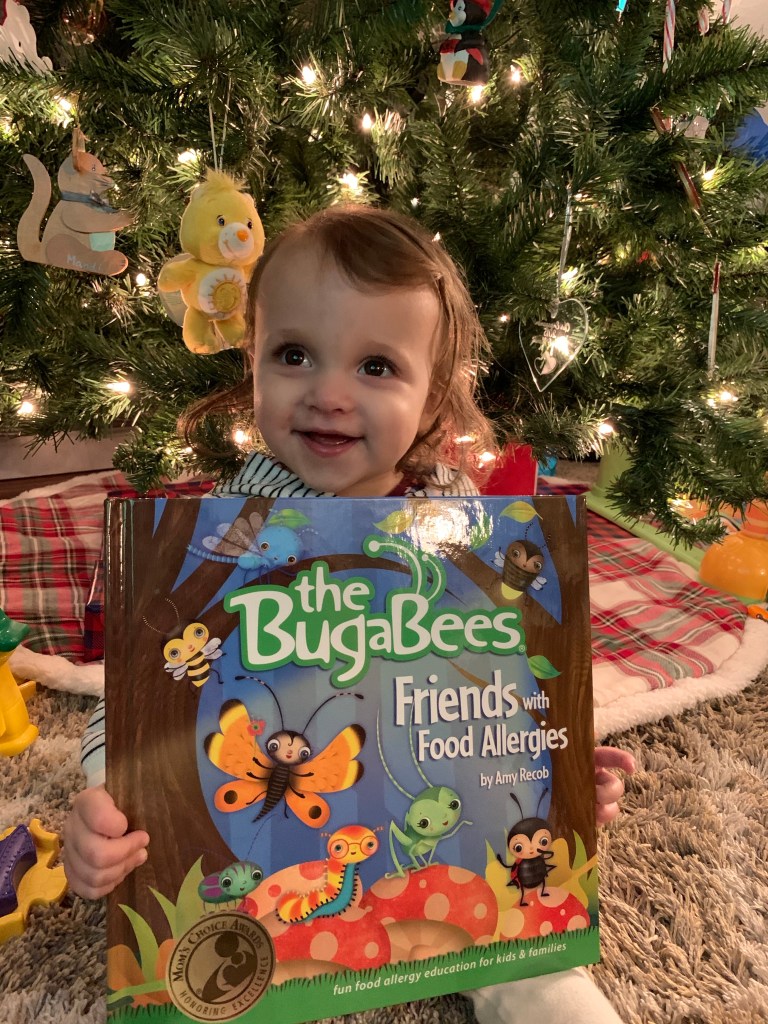
The BugaBees – A Children’s Book About Food Allergies

At one of Asa’s first allergist appointments, I noticed a book they had in the room. It was called “The BugaBees: Friends with Food Allergies” by Amy Recob, and after giving it a quick glance, I jotted it down in my notes on my phone. We had just learned about her food allergies and I was still pretty overwhelmed (as if that’s gone away now… ha!). I thought to myself, “maybe this could be helpful later” and then I kind of forgot about it for several months.

When I was making Asa’s Christmas at the request of family last month, I remembered the book. Thankfully, her great grandma got it for her and we’ve loved reading it already!

The book focuses on the top 8 allergens: peanut, egg, milk, soy, fish, wheat, shellfish, and tree nuts. In Asa’a case, she has three of the top 8 (milk, egg, and peanut). These 8 foods account for 90% of all allergic reactions. In the book, each BugaBee has a different allergen. They talk about their allergy and focus on the fact that they can enjoy other foods even though they have an allergy. At the end of the book, there is a cool little section that has a page for every allergy where it really tries to help the child understand the individual allergen, identify foods that contain the allergen, and learn ways to tell people that they have the food allergy and need to avoid that food.

My daughter is only 2, so explaining her food allergies to her has been hard. I feel like this book is a great introduction for her and helps up explain the food allergies in a simple, yet effective way. It also tries to focus on the fact that food allergies don’t ruin all of your fun, which I think is really important as kids learn their allergies and start to see other kids eating things that they can’t. On their website, thebugabees.com, it says that the books “are intended to inspire confidence and camaraderie among the millions of children all around the world living with food allergies.” What a beautiful thing!

If you have a child with food allergies or you know a child with food allergies, this could be a really thoughtful and cute gift idea for them! I know we will read it more and more as Asa gets a little older and starts to understand her food allergies better.

Brand review! Oat-ly Ice Cream!

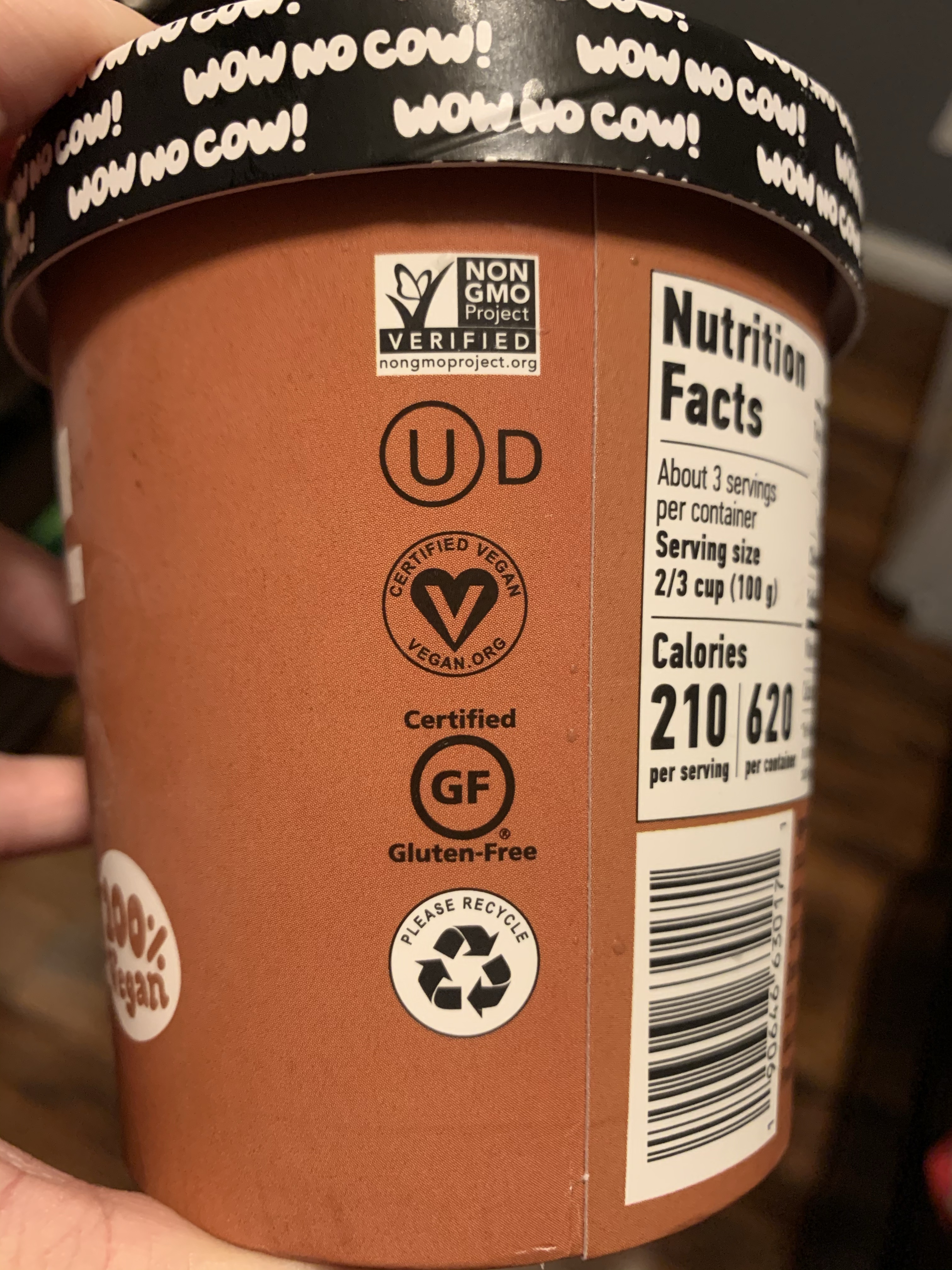
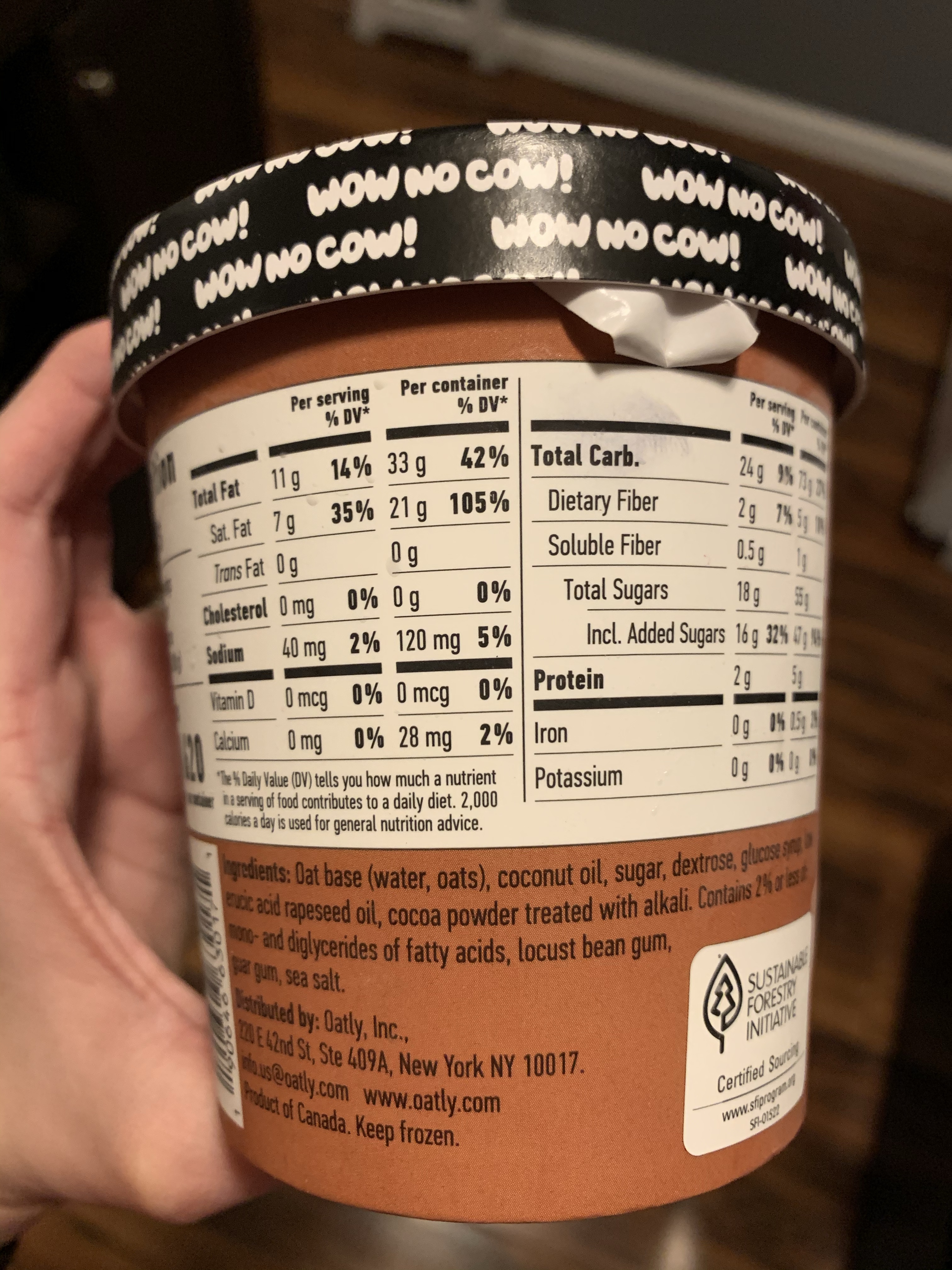
Today is my daughter’s 2nd birthday! Unfortunately, we had to cancel her birthday party because the flu has hit our home HARD and 3/5 of us are sick (including her and me). We still tried to celebrate a little with some Asa allergy-friendly ice cream! She absolutely loved the Oat-ly chocolate, non-dairy, vegan “frozen dessert”! Asa is allergic to dairy, egg, and peanut which makes most ice creams impossible for her to eat – but this was perfect.

Also, I tasted it and it honestly tastes just like chocolate ice cream! I think if I served it to people without them knowing they wouldn’t even know the difference! We will definitely be getting this again! Can’t wait to try other flavors too!

*We bought this at Target for those wondering where you can find it!

Finding Dairy in Unlikely Places

When we found out that Asa had allergies, the first one we discovered was dairy. My initial thought was, “Well I guess she can’t have milk or ice cream or yogurt.” But the more I started thinking about it, the more I realized dairy was in everything! It’s hard enough to navigate food items, but I had never even thought about the non-food items that dairy could also be hiding in. I still find out new things every day. So where are some of these milk ingredients hidden, you may ask? Well… let’s look at a few!

First, it’s important to note that dairy can come in multiple forms so it’s imperative to know all the words you are looking for. Milk, lactose, Recaldent, casein, whey, and lactalbumin are all dairy ingredients, so it’s not just as simple as looking for “milk” on a label. Also, “lactose free” and “dairy free” are two VERY different things. A lactose intolerance is NOT the same as a dairy allergy and the two should never be confused. And just because something is “lactose free” does not mean it doesn’t still contain dairy/milk!

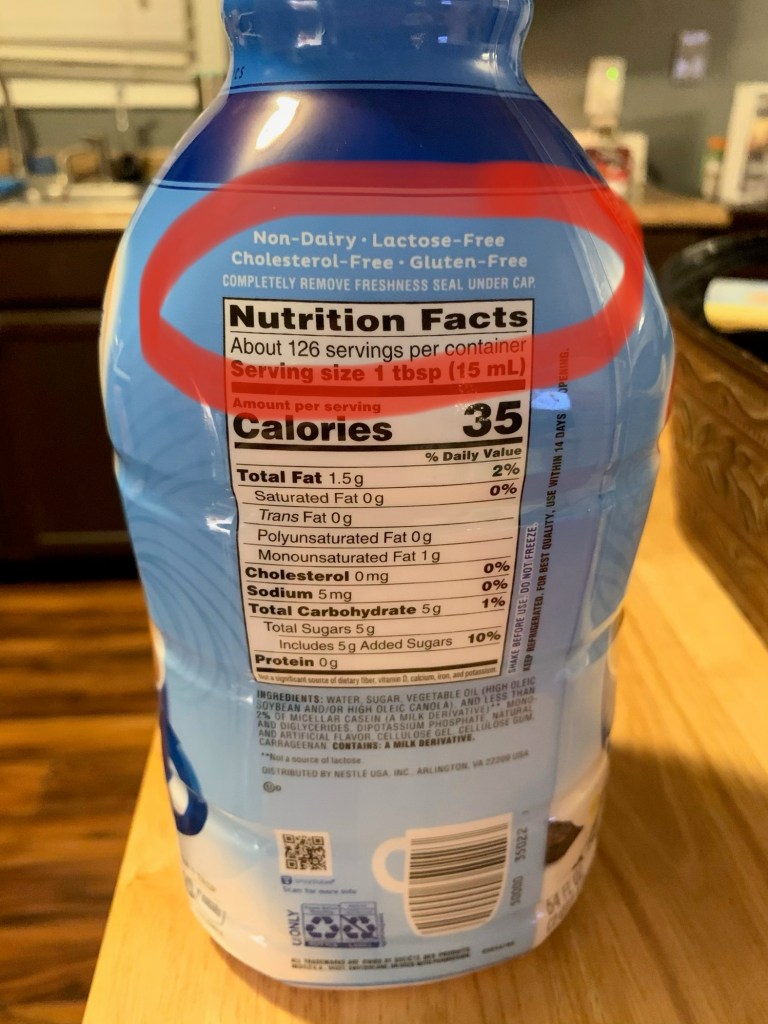
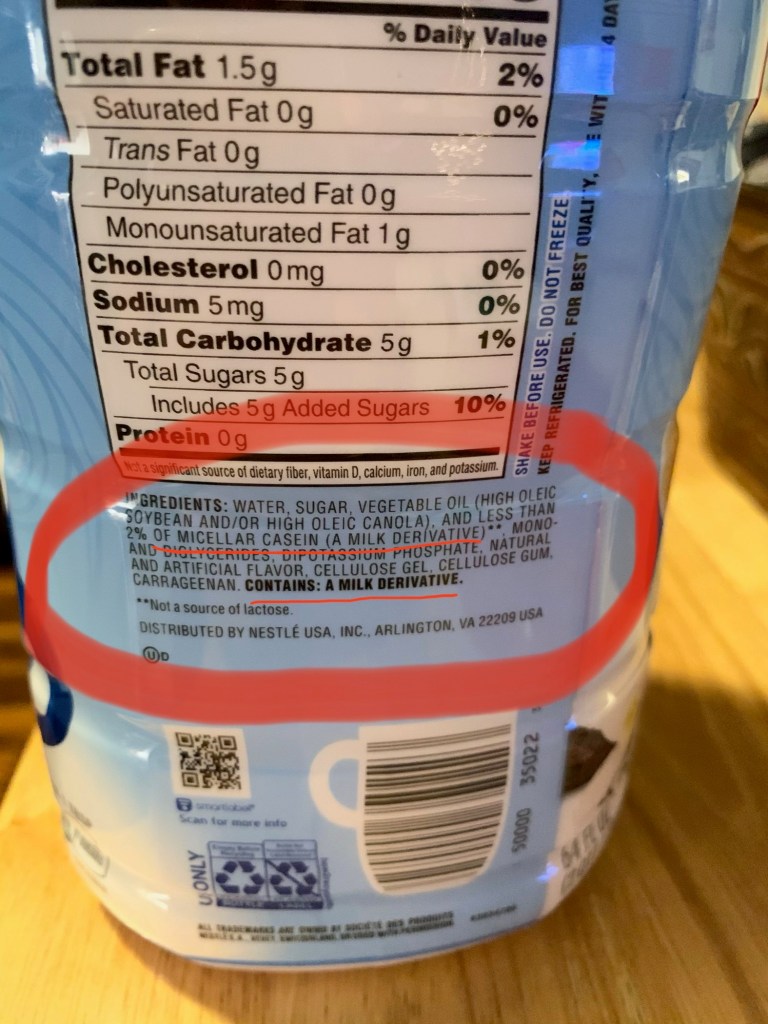
But if a label says “dairy free” it should be safe, right? Not quite. This is crazy to me, but some things can be labeled “dairy free” and still contain milk ingredients. Take coffee creamers for example. Many of them say they are dairy free but still actually contain milk. See the pictures below of this Coffeemate French Vanilla Creamer:

The first picture shows the “Non-dairy” claim while the second picture shows that it contains casein, “a milk derivative”. The one shows the importance of checking the ENTIRE label, no matter what!

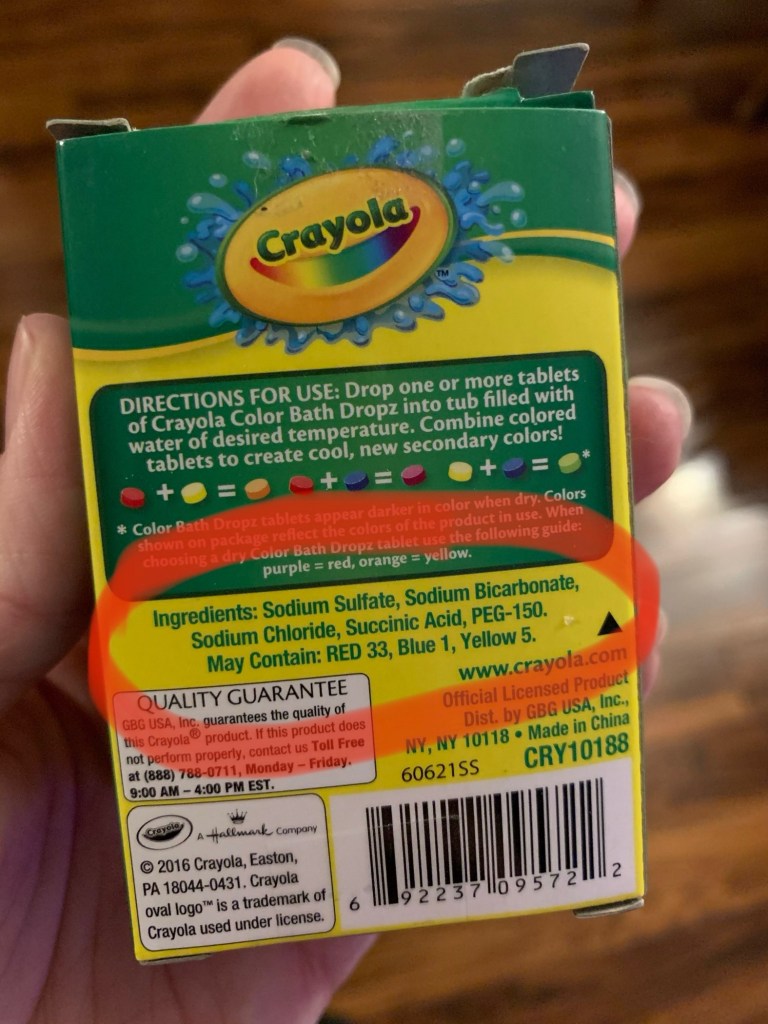
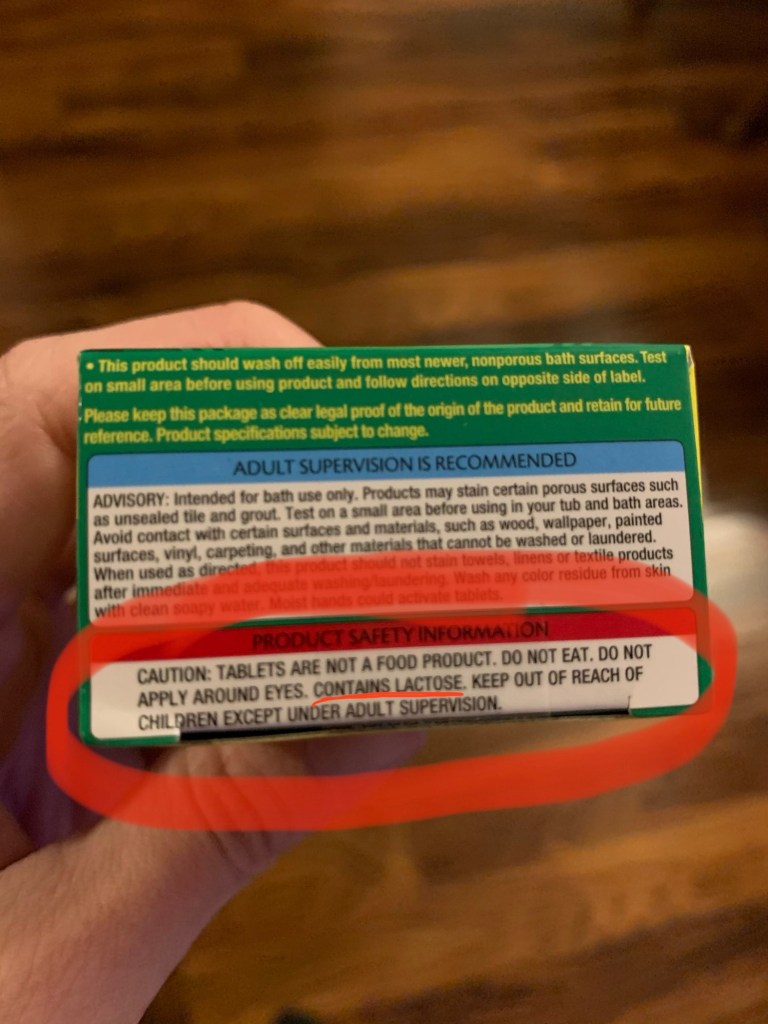
So what about those non-food related things? A friend actually sent me this one the other day and I was appalled to find I had this one in my house! Thankfully I had never used it with Asa, but our older daughter has used them multiples times. She doesn’t have food allergies so we were safe there, but the thought that I could have used these with Asa without thinking terrified me. Crayola Color Bath Dropz contain lactose! Again, this label is super tricky. The ingredients do not list lactose. They legally don’t have to since this is not a food product. (Don’t get me started on the laws here. I’m saving that whole topic for another blog.) But a closer inspection of the box shows that it does, indeed, contain lactose. *It’s important to note that I have the box but most of these come in a tub so be on the lookout regardless of the packaging!

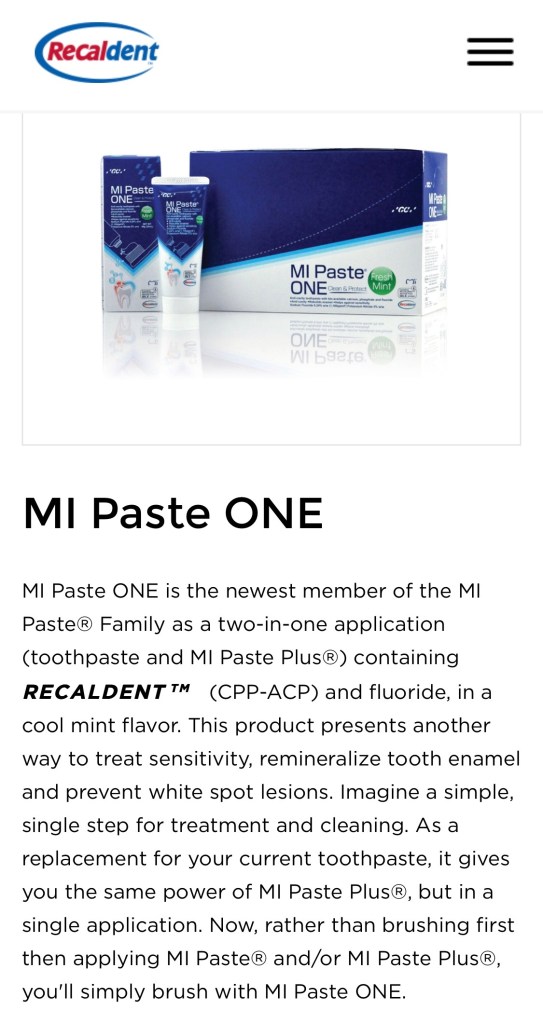
I read a story once of a girl dying from using a medicated toothpaste that her dentist had prescribed to her. This dentist knew about her milk allergy but still prescribed it anyway. Several whitening and medicated toothpastes contain an ingredient called Recaldent. This is made of a milk derivative. If you have a food allergy, it’s important to not only talk to your dentist about any allergies you may have, but ask them to see the ingredients before you begin using any new products!

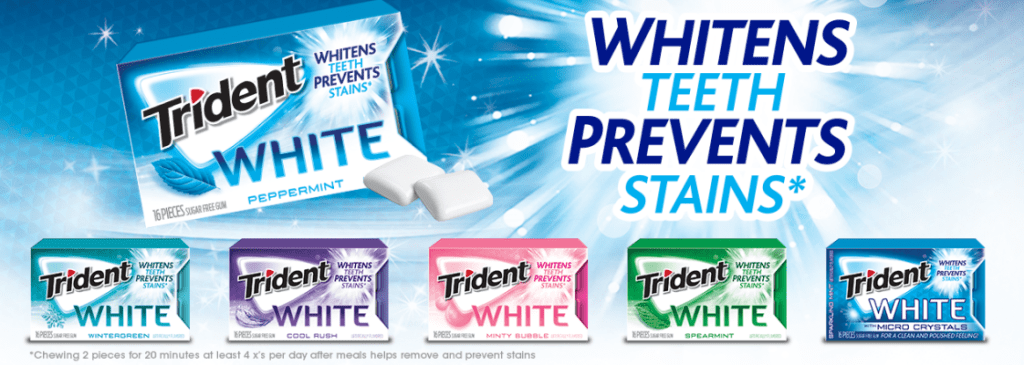
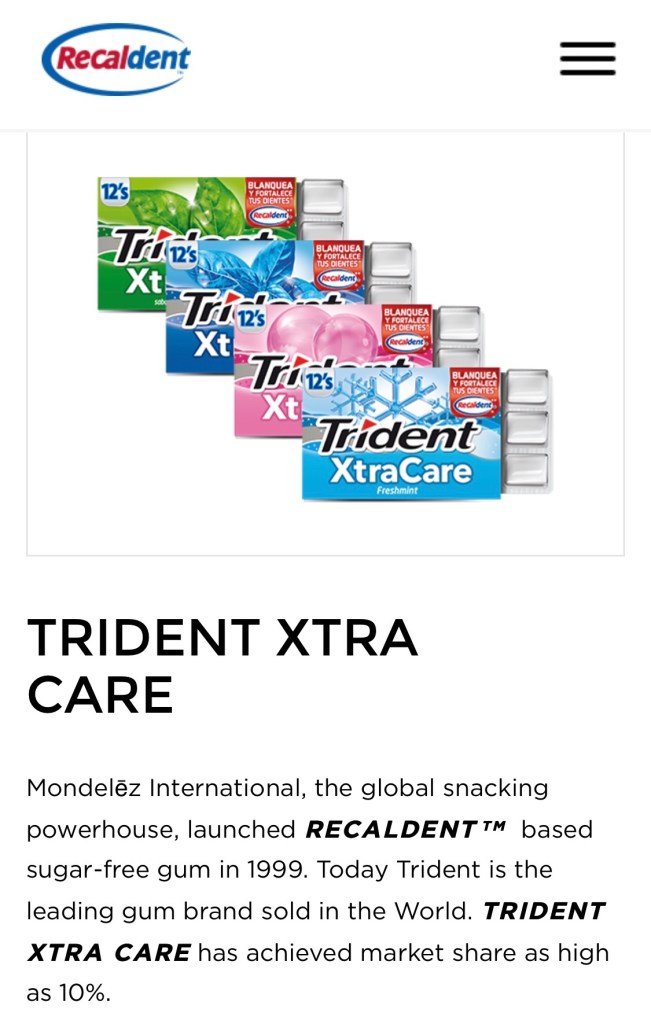
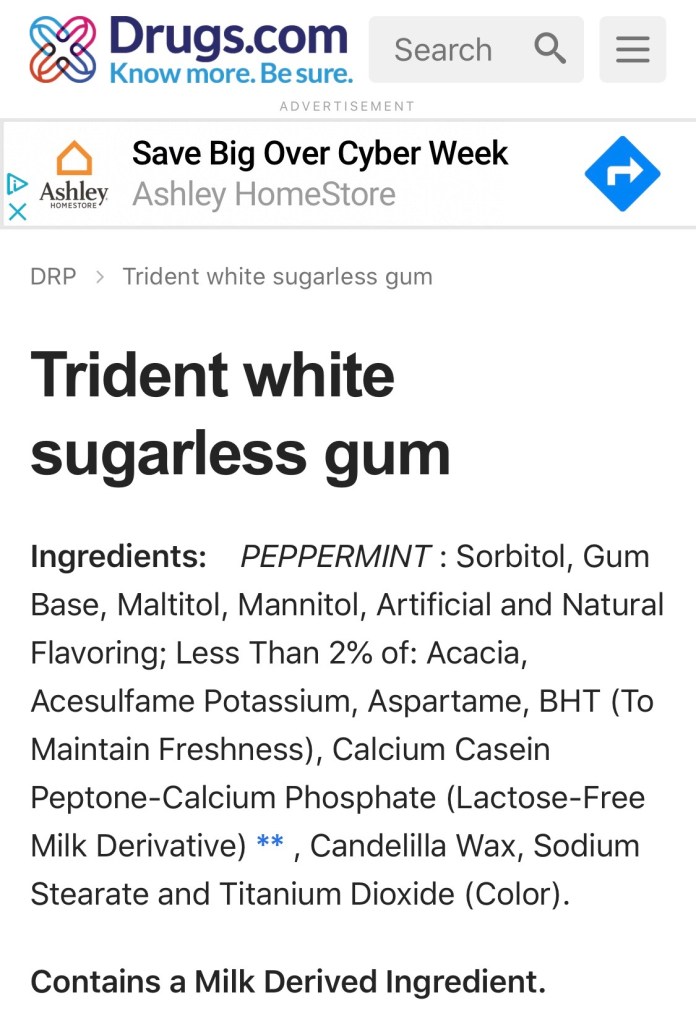
Recaldent is not only found in these toothpastes, however. It’s also found in a very popular gum brand – Trident! It is not in every version, but it is definitely found in Trident White and Trident XtraCare.

Another weird place to find a milk ingredient is in dust-free chalk. Many of the name brands do not contain the dairy ingredient, casein, but some off-brands do. This can be scary because, again, they do not have to list this on the package since chalk is not a food product. You can always contact the manufacturer to get specific ingredient information, but this isn’t always an easy or quick task. Casein can also be found in glues, paints, and inks.

I hope this blog is as eye-opening to you as it was for me when I learned about these things. I only scratched the surface here, as dairy can also be found in daily things like cosmetics and lotions where, once again, they don’t have to be labeled. Navigating a dairy allergy is a lot more than simply avoiding that 2% gallon of milk most people have in their fridge. It’s something that requires you to be be vigilant daily to avoid a major catastrophe!

The Guilt is Real

I don’t know about any other allergy parents out there, but I constantly feel guilty having to talk about Asa’s allergies with other people. On Thanksgiving I had to make an announcement and ask everyone to make sure they washed their hands and their kids hands after they finished eating so that Asa didn’t get touched after someone who had touched one of her allergens. Even while I was making the announcement, I was cringing inside. I hate having to be “that mom”. You know… the mom that seems overprotective and pushy. The mom that wants to tell you how to parent your kid. The mom that has to ask you to take extra steps when you’re around my daughter. I hate it. But I have to do it.

The reality is, that announcement had to be made. I can’t risk my daughter’s well-being just for my anxiety’s sake. But man… it’s hard sometimes.

I can’t tell you the number of awkward moments I’ve had. The countless times I’ve had to ask people to wash their hands. The times I’ve had to remind my friends that their kids’ bottle filled with milk couldn’t be left out for fear my daughter would grab it and take a drink. The times I’ve had to remind the Sunday School workers again for the 10th Sunday in a row that my daughter has allergies and can only have the snack we packed for her. The times we’ve had to give the epipen tutorial. The times I’ve had to ask that my friends put away the peanut butter snacks while we are around. The times we’ve had to wipe down tables/high chairs when we get to a restaurant while other people look at us and think we are just massive germaphobes. All of these times are really hard. Every time makes me feel a little crazy, a little needy, and a lot self-conscious.

Trust me – the last thing I want to do is bring it up. The last thing I want if for you to think I’m telling you what to do with your kid or your life. But I have to. Because if I don’t stand up for my daughter, who will? After all, she’s only a toddler. It’s my job as her mom to protect her and keep her safe. If anything ever happened to her because I chickened out and didn’t give the reminder even just once, I’d never forgive myself.

I’m forever grateful to my friends that go out of their way to make sure their kids only have Asa-friendly snacks when we are around. The ones who text for clarification of her allergies. The ones who offer to order a special vegan cupcake at their child’s birthday party just so that Asa doesn’t feel like out. The family who wipe things down religiously and advocate on our behalf daily. I’m thankful for them because they take some of the weight off me. They make sure I don’t have to ask them to keep Asa safe. Instead, they proactively try to keep her safe themselves. And I can’t tell you how much that means to a mom who constantly feels like a crazy person with crazy requests. We don’t want to live this life. But we have to. So please, I beg you – be gracious. Be understanding. Be considerate. Don’t be afraid to ask questions. I don’t expect you to know everything about food allergies. I know I sure didn’t before we had Asa. I’m still learning everyday. But just know, it’s awkward when we have to ask people to help us keep her safe. And it means the world to us when you try to be accommodating and helpful! It means way more than you know!

Becoming a Food Allergy Mom

On November 27, 2018, we found out that my 11-month-old daughter was allergic to dairy. I suspected she might be after two strange incidents. The first incident involved vomiting violently after eating a new baby puree. When I checked the ingredients of the tub of baby food, I saw that it had pineapple and milk – two things she had never had before. I wondered if that could be a cause but I quickly dismissed the thought and returned to life as normal. A month or so later while eating out at a restaurant, my daughter got ahold of a butter packet on the table. She chewed on it, busted it open, and made a mess. I didn’t think much of it – after all, my kids have done much worse before. But about 10 minuted later, I noticed that she had a swollen upper lip.

At first I thought she must have hit it when the packet exploded. Then my mom brain kicked in – what if this was the milk in the butter? Could she be having an allergic reaction? Again, I sort of dismissed my thought but her lip was only getting worse so we decided to be safe and head to urgent care.

The doctor said that it did, indeed, look like an allergic reaction. My head started spinning. There’s no way she’s allergic to milk, right? Not my kid. We made a follow up with our pediatrician who referred us to an allergist just in case. Two weeks before my daughter’s first birthday (you know… the one where they are start drinking whole cow’s milk…) we found out that she had a dairy allergy. What did this mean??? They ordered us an epipen, quickly taught us how to use it, gave us about 20 sheets of information about allergies, asked if we had any questions and sent us on our way. Did I have any questions? Um… yeah… about a thousand. I couldn’t even wrap my head around this food allergy. No one else in my family or my husband’s family had ever had a food allergy. I had no idea what it really meant. But boy, was I about to find out.

Within a couple months, our allergist had us try a few other foods – soy, egg, peanut. Soy didn’t produce an allergy. Thank God! One down! When my husband tried peanut butter one day while I was at work, he thought we had made it through that one as well. She was acting fine. But the moment I walked in the front door after work, I saw a tiny spot on her skin. We started checking her and the hives literally started spreading before our eyes. We called 911. I had to give the epipen. My daughter was crying hysterically. I was putting on a brave face but inside I was terrified. We went to the hospital to be monitored. Thankfully, the epipen worked and we were discharged within a few hours.

Another month went by and we introduced egg. This time, we were both home when we did it – we were scared to do it alone. Her reaction to the egg was scarier than anything we had ever experienced. She broke out in hives. BAD hives. So bad that they spread to every inch of her body. I called 911 to be safe. I wanted them to check her lungs. While on the phone with them, my daughter started wheezing. My husband and I looked at each other and knew that the epipen was needed. I once again slammed the needle into my daughter’s leg. She once again cried. We were once again terrified. We went to the hospital, as you always should after administering an epipen. But this time was worse.

The hives started spreading again. She was crying and lethargic. She was laying on me and not letting go. I was praying – literally. The doctor said they were going to have to do another round of epi. They went to place the order. I was filled with fear. Why wasn’t this working? Why was she so lethargic? Was she going to be ok? I prayed again – literally. Right before the doctor came back in the room, her hives started subsiding. She started acting more like herself. Thankfully, we escaped having to administer more medicine, but the fear remained.

My husband and I went home that day more scared than ever. It was the first time we had REALLY seen the potential danger of her food allergies. This was more than hives. This had effected her breathing, and that’s something you never want to see your child go through. From that moment on, we became more vigilant than ever. Throughout the past year, we’ve learned a ton. We still mess up. Food allergies are really difficult to navigate. And out of that, this blog/site was born. My goal is help provide support, educate others, and share some tips and tricks along the way! Like it or not, I’m a food allergies mom. I hope this will help some others out there like me!